Für Geld gibt es im Deutschen gaaanz viele Wörter. Wie viele kennen Sie schon?
Nehmen Sie sich eine Minute und schreiben Sie so viele Wörter für Geld, die Sie kennen. Mit diesen drei können Sie anfangen:
Geld, Cash, Kohle ...

User Rating: 5 / 5

Für Geld gibt es im Deutschen gaaanz viele Wörter. Wie viele kennen Sie schon?
Nehmen Sie sich eine Minute und schreiben Sie so viele Wörter für Geld, die Sie kennen. Mit diesen drei können Sie anfangen:
Geld, Cash, Kohle ...
User Rating: 0 / 5

Ihnen wünsche ich ein gesegnetes Fest und einen guten Rutsch* ins neue Jahr!
Hier ein paar wichtige Vokabeln bezüglich Daten:
24.12. = (der) Heiligabend
25.12. = 1. Weihnachtstag
26.12. = 2. Weihnachtstag
Denken Sie daran, dass "1. Weihnachtstag" eigentlich "erster Weihnachtstag" heisst.
User Rating: 5 / 5
"Viel" oder "Viele"? Gute Frage!
It depends on whether or not you're speaking about something that can be counted. For example:
viel Zeit - lots of time. Time in general cannot be counted. (You can count hours, but not time itself.)
viele Menschen - many people. People can be counted.
Erfolg (success) is another example of something that cannot be counted. Certain things, yes, like finishing a degree or obtaining your driver's license, can be counted, sure, however they are very specific events. But the notion of success is not countable. Thus when we wish someone success in German, we say "Viel Erfolg!"
So when you are unsure, be sure to ask yourself the question if something is countable or not:
Ist die Sache zählbar? Oder unzählbar?
The trick is knowing which things in German are countable or uncountable as it differs from your native language.
User Rating: 0 / 5
When you use a computer program to learn German and then go to a class or lessons, you will eventually have this kind of epiphany:
Oh, THAT'S what that app [computer program/website/electronic learning tool] was trying to get me to do. Now I understand WHY.
Computer programs are great for things like vocabulary learning, listening, and multiple-choice or fill-in-the-blank questions--because these are binary situations--either you have the correct answer or you don't. So what about the rest of your learning? What about live feedback? What about guidance?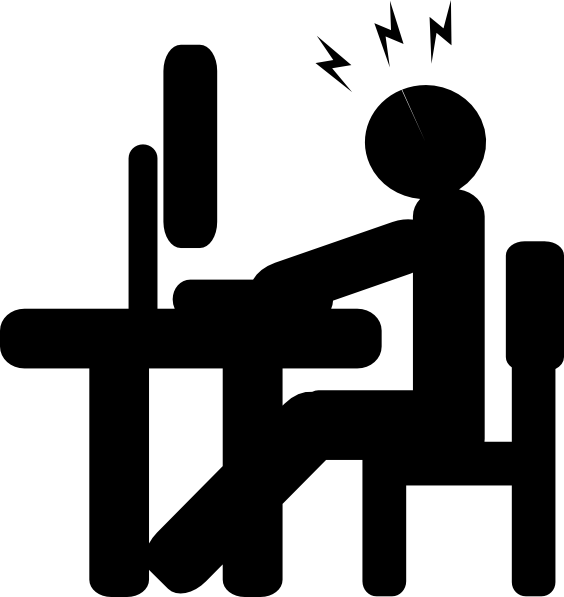
3 Reasons why computer-based German programs don't work:
1. There's no interaction.
Since there is no teacher, there is no interaction. Learning a language is an active, living process, just as a language is a live, living being that changes over time. So does your learning as you gain new skills, acquire vocabulary, learn how to express yourself in this new language.
All you get in an app or a program is a right-wrong situation, and no explanation why you are doing something correctly or incorrectly. With the right teacher, you'll have explanations that include the what, the why, and the how. An effective teacher will be able to give you visual cues, mnemonic devices, rules of thumb, grammar charts and visual aids.
User Rating: 5 / 5
"Das mache ich gern."
"Ich gehe gern schwimmen."
oder
"Das mache ich gerne."
"Ich gehe gerne schwimmen."
Sagt man eigentlich "gern" oder "gerne"? Gute Frage! Man kann entweder "gern" oder "gerne" sagen--es macht praktisch keinen Unterschied. Je nach dem Satz, können Sie frei wählen, ob Sie gern (oder gerne) "gern" oder "gerne" sagen möchten.
*
You can use either "gern" or "gerne" in German, it doesn't really make a difference. Depending on the sentence, you can go ahead and choose if you would like to say "gern" oder "gerne."
Obviously it's shorter to say "gern," so if you're in a hurry, "gern" would suffice. Or perhaps you feel like saying two syllables, and you respond to a request with "gerne." Go for it!
***
This reader question this week came from D. M. in Österreich. Danke für die Frage!
Haben Sie eine Frage?This email address is being protected from spambots. You need JavaScript enabled to view it.and get it answered here on the blog!
User Rating: 0 / 5
Guten Tag!
Good news for those of you with flextime and homeschool schedules: I have a few more daytime spots open!
As of November the following daytime lesson spots are available (all times CENTRAL):
If you're interested in one of these spots, click here to read about lessons and to book your Schnupperstunde (trial lesson). Ich freue mich auf Sie!
Viele Grüße,
Nicole
User Rating: 0 / 5
Learn German Online with Nicole has scrapped the 10er-Karte in favor or a regular payment process. Your Schnupperstunde stays the same--60 minutes for $30, but now you pay a regular tuition payment and you choose either monthly or quarterly.
So after your Schnupperstunde, when you sign up for German lessons, your initial tuition payment is for 2 months: your first month of lessons and your last month of lessons (that could be in 4 months, that could be 4 years from now). (I require a 30-day notice if you are going to stop taking lessons, thus I request the last month's tuition up-front.)
You can pay monthly or quarterly with a credit card (via PayPal) or by check and you can start at any time--because you get 44 lessons in a 12-month period.
There is no registration fee, there are no hidden costs. You buy the book, pay your tuition, and we meet online for your lessons. Das ist alles!
Predictable, budget-friendly German learning. Das ist ja super!